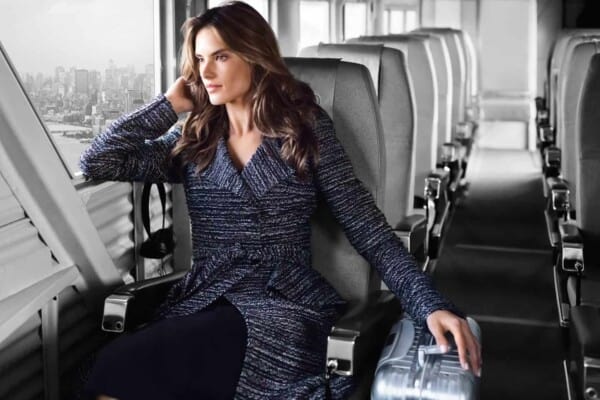
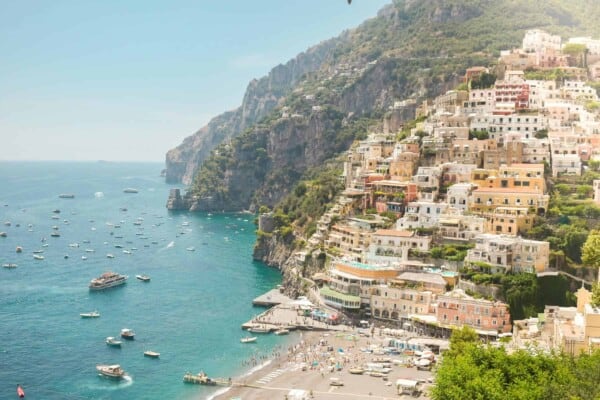
Orient Express has unveiled a new five-night rail journey across Italy aboard the La Dolce Vita train, and I’m pleased to report that somebody, somewhere, still understands the point of travelling properly.
Which is encouraging, because modern tourism has become oddly obsessed with efficiency. People boast about “doing” three countries in four days as though holidays are military operations. They fly vast distances only to spend most of the trip photographing cocktails they never actually taste. Somewhere along the line, travel became a competitive sport for people who wear airport lounge access around their necks like military decorations.
This, thankfully, appears to involve sitting down and looking out of a window for extended periods of time.

The new itinerary takes passengers from Rome to Venice, then south through Matera and Sicily before eventually returning to Rome again. It’s loosely inspired by the old Grand Tour tradition, where wealthy young Europeans travelled through Italy to become culturally educated, although from what I can gather most of them simply drank alarming quantities of wine and painted vague watercolours of ruins.
Still, they were onto something.
The journey begins in Rome, naturally. Italy would probably stop functioning altogether if things didn’t begin in Rome. You board the La Dolce Vita Orient Express there and head north while lunch is served against a backdrop of vineyards, hillsides, and small Italian towns that seem to have been arranged by somebody with an almost unreasonable commitment to visual harmony.
I’ve always liked trains because they acknowledge geography properly. Aircraft don’t. With flying, you disappear into a metal tube in one country and emerge several hours later mildly swollen in another. Trains let you watch the world changing shape. The colours shift. Roof tiles alter subtly. Even the laundry hanging from balconies begins to look different.

By early evening, the train arrives in Venice, where guests are transferred to the city centre with private water taxis. Venice after dark has a strange atmosphere to it. It’s slightly theatrical. Slightly faded. You feel as though everybody else knows something important that you don’t.
Orient Express says passengers can either explore independently or join curated experiences around the city. Which probably means somebody local takes you through tiny alleyways to a wine bar containing six chairs and an elderly man who refuses to write the menu down anywhere. Those places are usually better than the famous attractions anyway.

Back onboard, the Bar Car apparently turns lively in the evening with musicians and live entertainment. This sounds dangerously close to becoming glamorous, which makes me slightly suspicious. Still, there’s something reassuring about hearing piano music while crossing Italy at night. It feels civilised. We don’t do enough civilised things anymore.
The train route then continues toward Matera, which is one of the most astonishing places in Italy largely because it appears to have been carved directly into a cliff by exhausted monks. Its famous cave dwellings, known as the Sassi, tumble down the hillside in a way that seems structurally impossible.

You wander through narrow streets and staircases for a while and eventually lose all sense of direction, though that’s true of most beautiful Italian towns. Italians have never fully embraced the concept of straightforward urban planning. They prefer charm.
Dinner onboard is prepared by Heinz Beck, the Michelin three-star chef, as the train heads toward Sicily. The menus apparently change according to the region outside, which is reassuring. One of the quiet tragedies of modern luxury hotels is that breakfast in Singapore increasingly resembles breakfast in Frankfurt.
Then comes the part I genuinely love.
To reach Sicily, the entire train is dismantled and ferried across the Strait of Messina. The actual railway carriages are loaded onto a ship and carried over the sea before being reassembled on the other side. This is magnificently complicated in the way only old railway systems can be.

The crossing itself sounds rather wonderful. Olive groves and cliffs in the distance, the Mediterranean shimmering beyond the deck, and somewhere underneath it all the gentle mechanical clanking that accompanies proper rail travel. Luxury today often tries too hard to remove machinery from the experience. Good trains should still sound like trains.
Once in Sicily, passengers stop in Taormina and Palermo before returning north to Rome. Taormina occupies one of those absurdly beautiful positions above the sea that Italy seems able to produce every twenty miles or so. Palermo has more chaos about it. Markets, scooters, faded grandeur, and enough layers of history to make Britain seem comparatively brand new.

The La Dolce Vita train itself debuted in 2025 and carries just 62 passengers, which is probably sensible. Too many people would ruin the illusion slightly. You want this sort of journey to feel intimate enough that by the third evening everybody recognises one another in the bar car and silently competes for the best armchair near the window.
The interiors lean heavily into 1960s Italian glamour. Rich reds, polished wood, gold accents, elegant suites. It all sounds faintly cinematic, like something Marcello Mastroianni would emerge from holding an espresso and a cigarette.
The first Grand Tour departure takes place on May 21, with prices starting at around €15,760 per passenger. Which is undeniably expensive. Then again, people spend nearly that much on German SUVs that mostly visit supermarket car parks and school entrances.
At least this crosses Italy slowly, with decent food, proper scenery, and enough time to think. Which, these days, feels almost revolutionary.