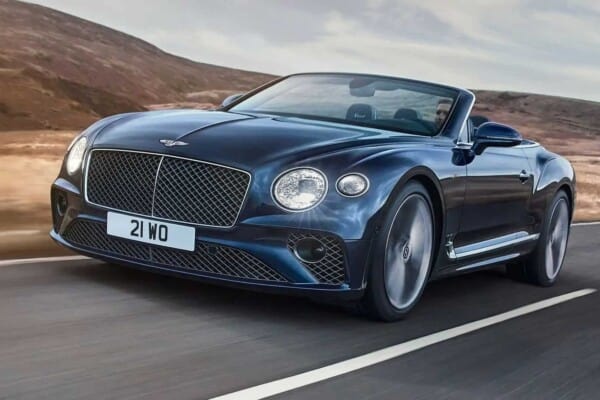
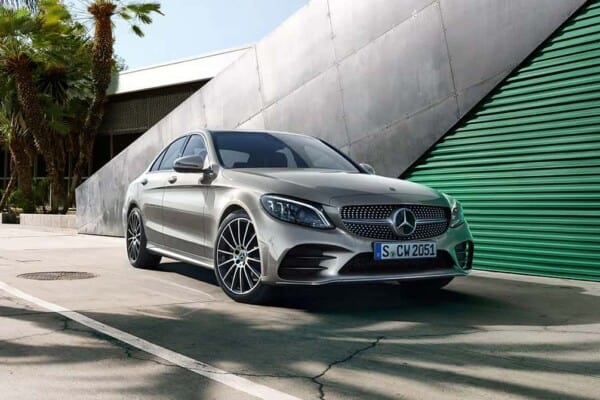
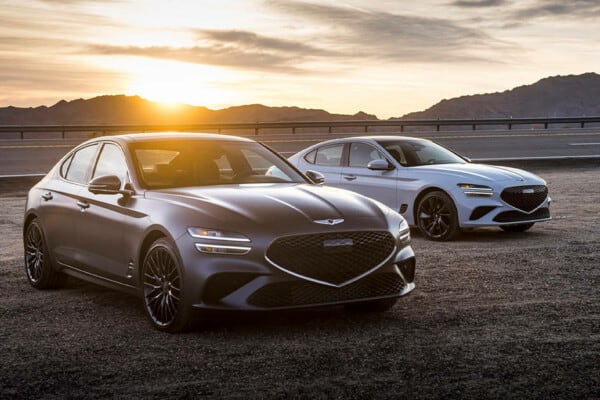
There is a type of premium object that announces itself without trying. No explanation of where it came from. No list of what it can do. You simply see it — parked outside a good hotel, cresting a dune, moving through city traffic — and you know immediately. The person behind the wheel has made a very specific decision about how they want to move through the world.
The G700 is becoming that kind of object.

What makes this worth paying attention to is not the three locking differentials, though those matter. It is not the Rolls-Royce–partnered audio system, or the fact that it reaches one hundred kilometers per hour in 4.6 seconds. It is the fact that before any of those credentials were made visible to the world, JETOUR did something no premium off-road manufacturer had thought to do: they called Paula Scher.
The designer who said yes to a car

For five decades, Scher has been one of the most consequential forces in global graphic design — not because she chases recognition, but because her work carries an uncommon quality of inevitability. Described as the “master conjurer of the instantly familiar,” she has spent a career straddling the line between pop culture and fine art, with results that feel obvious the moment you encounter them — as if they had always existed and you simply hadn’t noticed until now. The Citibank identity that became a case study in American brand regeneration. The Public Theater’s typographic language that fused high and low culture into a wholly new symbology for cultural institutions. The visual worlds of Coca-Cola, Microsoft, the Museum of Modern Art, the Metropolitan Opera, the New York City Ballet, and the Walt Disney Company.
These are not styling jobs. They are arguments about what something fundamentally is, made visible with such precision that they feel like they could not have been any other way.
She had never done this for a car. Then she went to Dubai.
The G700’s global debut was where Scher first encountered the vehicle in person — its commanding proportions, the deliberate confidence of its interior, the particular sense of a car that already knew exactly what it was. “The exterior of the G700 is sculpted,” she said. “When you see it, particularly up close, and you begin to touch it and feel it, it feels like a piece of sculpture. It’s been modeled.” For someone whose entire career has been built on reading the essential character of a thing and making it legible to the world, that is not a passing remark.
It is a brief.
What she built from it

Scher’s commission was the G Series visual identity — and what emerged was “Ridge of Steel”: a concept rooted in Himalayan geology and the conviction that the most powerful structures in the natural world are simultaneously immovable and alive. “The terrain is not just rugged, it’s gorgeous,” she reflected. “It represents a challenge. It’s part of what makes life exciting.”
That sensibility became a complete visual language — the kind of holistic identity work Scher has spent a career perfecting. A custom typeface pulled directly from the car’s own body lines — “sleek, not fussy or overly decorative, and it looks like it’s in motion,” in her words — sitting alongside a red-orange brand signature that reads, even at distance, less like a color choice and more like a statement of intent. The same instinct that made the Public Theater’s identity impossible to walk past on a New York street is at work here — scaled to terrain rather than to pavement.
Yan Jun, Executive Vice President of JETOUR International, recognized exactly what Scher had produced: “She can even let the visual speak. That’s why she is a true master. The Ridge of Steel really fits the product. It’s highly recognized and easy to be remembered.”
Worth being clear about: Paula Scher did not design the G700. She designed what the G700 means. Any manufacturer can specify torque figures. Very few can bring in a Pentagram partner to build the cultural world their vehicle inhabits — and have the result feel deserved rather than decorative. As Scher herself put it: “The G Series disrupts the conventional premium off-road sector.” From someone who has spent five decades doing exactly that to every category she has touched, that is not a marketing line. It is a professional verdict.
The vehicle, which has opinions of its own

It would be a mistake to treat the Scher collaboration as the whole story. The G700 was already making an argument before she arrived. She gave it a voice. The vehicle provided the conviction.
Built on JETOUR’s GAIA All-Terrain Intelligent Architecture, this is a machine that earns its off-road credentials the only way that counts — through engineering decisions, not brochure language. Three locking differentials. Magnetic Ride Control paired with air suspension. A high-strength body-on-frame structure built for the kind of terrain where most premium SUVs start quietly reconsidering their options. When the ground gets difficult — a dune face, a mountain track, somewhere roads have no interest in going — the G700 keeps moving. No hesitation. No reconsideration.
Then you get inside and forget you were ever anywhere rough.
“The whole dichotomy,” Scher observed — “the inside of the car is very luxurious. The outside is powerful and it’s got some sleek lines to it, but the inside is a limousine almost. You know, suddenly you’re really in some exquisite situation while you’re going up some incredibly rock-ridden road.” Six seats with the kind of space that belongs in a first-class cabin. Multi-function seating with massage, leg rest, and a built-in table — not listed here as features, but as answers to a very reasonable question about what long-distance travel should actually feel like for people who have a genuine choice in the matter. Audio from a Rolls-Royce supplier. Tri-zone climate control. An air purification system, because the air inside deserves as much consideration as everything else.
The 6.6-kilowatt V2L power export can run an entire campsite directly from the vehicle — what JETOUR calls, with some justification, a mobile home. Towing capacity hits 2.5 tons. Zero to one hundred in 4.6 seconds. Not to make a point. Simply because it can.
“The G700 makes something possible that would have been impossible without it,” Scher said. “You can go there in this car. Mostly you can’t go there. That’s the difference — it makes that possible.”
What 13,913 buyers already worked out

Thirteen thousand, nine hundred and thirteen people bought one within six months of launch. That number is worth sitting with — not as a sales result, but as a verdict. These are design-literate, comfort-conscious buyers who looked at everything the premium off-road segment had to offer and made a deliberate choice. Not because of the badge. Because of what the badge has come to mean.
Ke Chuandeng, President of JETOUR International, was clear about the intention from the start: “Our original intention of creating the G-Series is to have a place in the world’s top off-road field. A place that has both strong technology and a real soul. We not only want to make excellent cars, but also want to build a premium hybrid off-road brand of a new era.”
That soul needed a visual language worthy of the machine underneath it. Paula Scher — who made Citibank feel inevitable, who made New York’s cultural institutions impossible to ignore, who has spent five decades making complex things beautifully legible — provided it.
The G700 is not reaching for Range Rover’s history or Land Cruiser’s legend. It arrived without either and without apology — and found one of the world’s great designers not to decorate it, but to say clearly what it already was. Its buyers are global travelers, equally comfortable at altitude and at a good table. People who can hold two ideas at once: that a vehicle should handle serious terrain, and that it should feel like a considered expression of who they are while doing it.
The G700 is one of the most coherent answers to that idea yet built.
Premium adventure has a new language. The G700 is fluent in it from the first mile.