There’s always a moment when you’re talking about yachts and sustainability when someone clears their throat and just says “Well, technically, sailing boats are already green”.
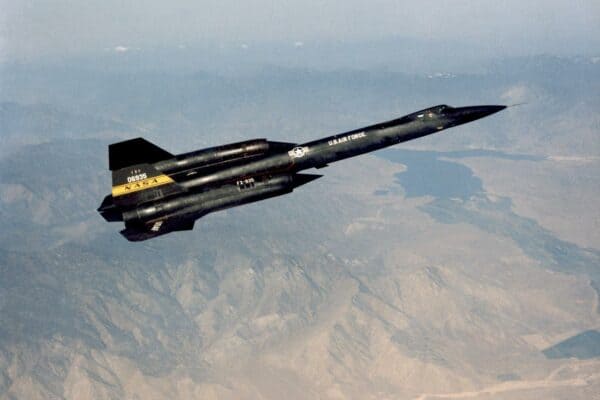
Yes. Technically. And technically, a Concorde was just an aeroplane.
The problem isn’t wind. It’s scale. Once a boat grows to the size of a floating boutique hotel with marble bathrooms and a chef who insists on fresh tuna at anchor, the numbers stop behaving. Which is why what Royal Huisman is proposing with Aera feels less like a concept sketch and more like a slightly rebellious thought experiment that escaped the design studio.

Aera is a stunning 164-foot catamaran concept that doesn’t seem to carry a sail but it actually seems to wear one. A massive single carbon-fiber wing, 115 feet tall, rising out of the middle like the fin of a polite but very serious shark. It’s not romantic in the old canvas-and-ropes sense. It’s romantic in the way an airliner wing is romantic, if you enjoy lift coefficients and efficiency graphs.
The thinking comes from people who have spent far too long trying to make boats go faster than physics would prefer. Iain Percy, Olympian and America’s Cup alumnus, is one of them, via Artemis Technologies. His question wasn’t “how do we sail?” but “how do we sail without a small army hauling on things.” Which is a fair point. Most owners don’t want to feel like they’ve bought a medieval galley.

So the wing rotates by electric motors, trims itself with computers, and responds to wind shifts the way a nervous racing sailor does — except without the shouting. Type in a destination, press a button, and off you go. Less “ahoy” and more “okay then.”
One Sail. Quite a Lot of Thinking.
The wing itself is a curious beast. Huge, yet cleaner aerodynamically than a traditional mast. Ten times less drag, apparently, which is one of those numbers that sounds invented until you remember how much fabric and chaos a conventional rig drags through the sky. To get the same shove from cloth, you’d need vastly more area. And then vastly more crew. And then vastly more aspirin.
When the wind sulks, Aera doesn’t throw a tantrum. It switches to electric propulsion, fed by batteries, hydrogen fuel cells, and — for the long hauls — generators that sip biodiesel instead of guzzling guilt. It’s not purity at any cost. It’s pragmatism, which is far more interesting.

Designer Cor D. Rover used the catamaran’s width the way it deserves to be used: by giving people space to breathe. The decks flow. They curve. They connect. You get over 7,000 square feet outside, which is absurd until you remember this thing barely heels. Two degrees. You’d spill more wine on a dining room carpet.
There are pools, naturally. One forward for the owner, one aft for everyone pretending not to envy the owner. It all feels unapologetically luxurious, which is rather the point. Saving the planet only works if people with the biggest footprints actually fancy the solution.
And then, quietly, from France, comes another boat that doesn’t want to wait for a billionaire to say yes.
A Catamaran That Knows What It’s For

The MODX 70, built by Océan Développement, is already out there, bobbing about the Mediterranean, proving its point. Seventy feet long. Entirely electric. No fossil fuel anywhere, not even as a guilty backup.
Solar panels cover it like sun-seeking lichen. The propellers recharge the batteries while sailing. And the sails themselves — inflatable wings that rise from carbon masts — feel faintly mad until you see them work. Press a button. Seven minutes later, you’re under sail. The boat decides the angle. You make coffee.

The naval architecture comes from VPLP, people who know what loads do to structures when things get lively. The wings swell to about 2,000 square feet, pull the boat along, and quietly top up the batteries as they go. It’s the closest thing to a yacht that understands the concept of multitasking.
Is it perfect? Probably not. Boats never are. But both Aera and the MODX 70 point to the same conclusion: the future of yachting won’t be a hair-shirt exercise. It’ll be clever, indulgent, faintly outrageous, and deeply engineered.
All that’s missing, in Aera’s case, is someone brave enough — or rich enough — to say, “Yes. Build it.”
If they do, the age of the sail might finally grow up.