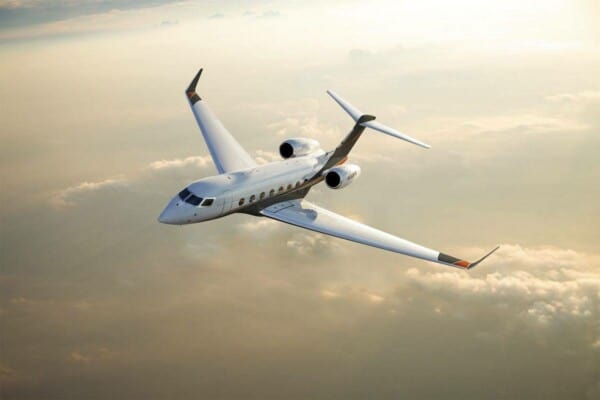
Lufthansa Technik and BMW-owned Designworks have a new private jet cabin concept called the Bow, a concept that’s built around a simple idea the industry somehow still hasn’t figured out: people don’t fly private alone.
They showed it off a couple of days ago at the 2026 Aircraft Interiors Expo in Hamburg, which is where aviation companies go to signal they’re thinking ahead. In this case, the thinking is about group travel -boards, sports teams, touring crews – and how awkward it still feels even at the high end.
Private jets are luxurious, sure, but they’re not especially flexible. That’s exactly what The Bow is trying to change.

The core idea behind this concept is modularity. The cabin is made up of individual suites that can be configured for one or two passengers, each wrapped in a curved shell that looks like it borrowed heavily from BMW’s design playbook. It’s sleek, controlled, and very intentional about looking expensive.

Inside, it’s less about aesthetics and more about behavior. The partitions move. The lighting shifts. Each pod can close completely. That last part is doing most of the work. You can have 20-plus people on board and still decide, individually, whether you want to engage with anyone else. Or not. That’s a level of control that sounds obvious until you realize most private cabins don’t actually offer it.

The rest of the aircraft leans into this idea of switching modes. There’s a reception area—yes, on a jet—with a bar, seating, and a large digital display that feels more like a stage set than a functional feature. Then a central lounge with curved screens and a table designed to handle both meetings and meals. It’s very much trying to be everything at once: office, lounge, restaurant. Whether those modes really coexist that cleanly is another matter.

Lufthansa Technik is calling this “group-centric VIP travel,” which is about as polished as corporate language gets. Translation: they think the next wave of buyers cares less about having a fixed, perfect layout and more about being able to change it depending on who’s on board. That’s not a small shift. Private aviation has always sold customization, but it’s usually locked in at delivery, not something you actively reshape.

The tech layer is exactly what you’d expect from a concept designed to make an impression. Hidden Touch Displays built into surfaces, OLED screens throughout, and an audio system using Omni-Fi speakers to create a more immersive environment. It’s all very integrated, very controlled, and very much about turning the cabin into a system rather than a collection of features.

What’s interesting here isn’t the curved walls or the lighting tricks. It’s the underlying assumption that luxury travel is moving away from static design toward something more adaptive. That the cabin shouldn’t just look good—it should behave differently depending on the situation.
And that’s where this starts to feel less like a design exercise and more like a test. Not of technology, but of whether private jet buyers actually want this level of flexibility, or just like the idea of it when it’s presented well on a show floor.